
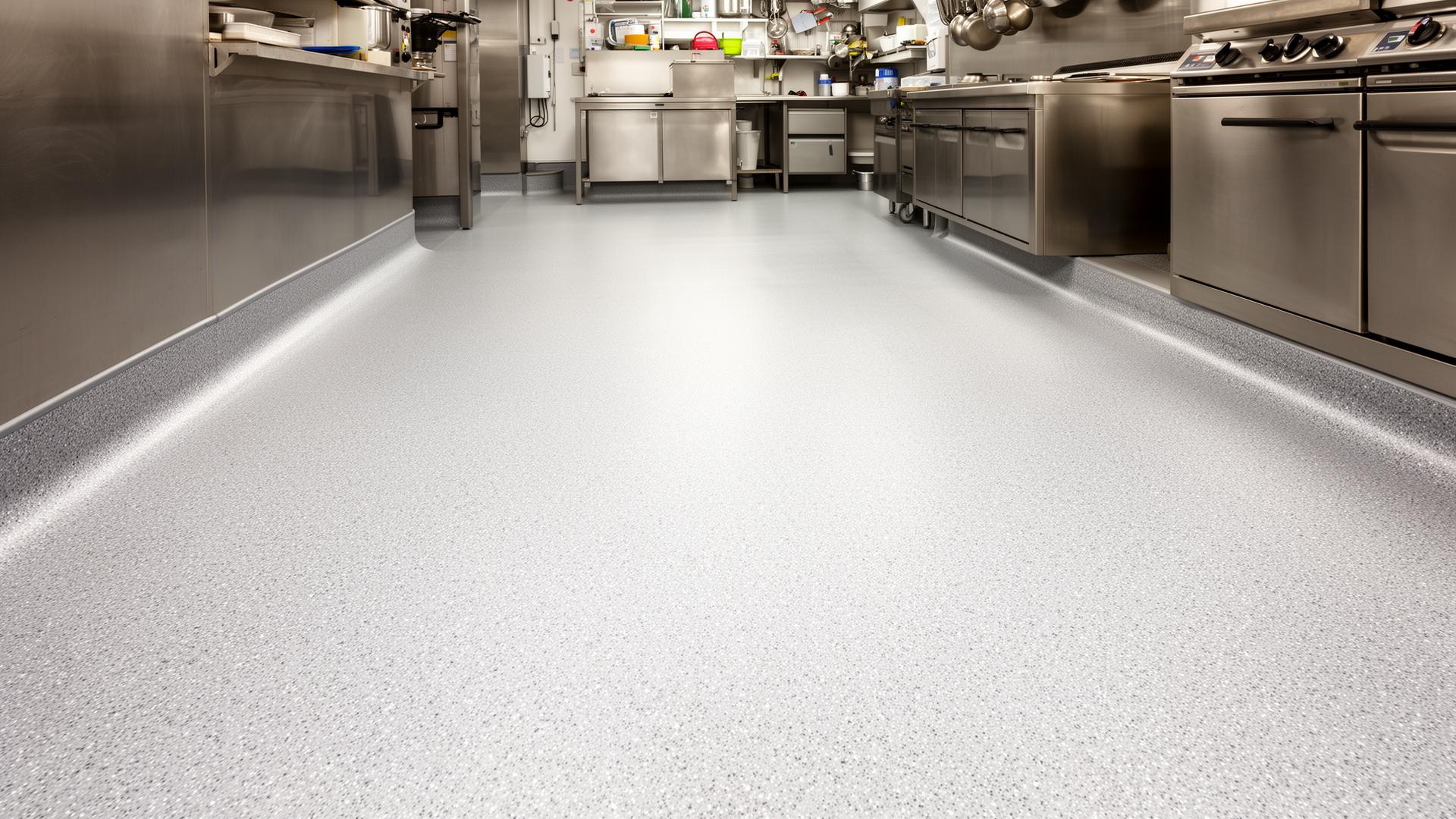
Light grey anti-slip safety vinyl flooring with coved skirting in a commercial kitchen
Safety & Anti-Slip Flooring

Anti-Slip FlooringFor Care, Education & CommercialR10/R11, Welded, Compliant.

Safety vinyl, anti-slip stair nosings and slip-resistant flooring systems installed for care homes, schools, nurseries, commercial kitchens and clinical environments, to spec, on programme.

R10/R11 ratings · Hot-welded seams · Coved skirting available
R10/R11
Slip Ratings
Care
Education, Clinical
Welded
Seams Standard
Out-of-Hours
Fits Available
30+
Years In Trade
Service Overview

What we do , and where it fits in.

What it is

Specification and installation of slip-resistant safety flooring, R10 and R11 safety vinyl, hot-welded seams, coved skirting, anti-slip stair nosings, treatment of existing floors and entrance matting systems.

Who it's for

Care home and supported living operators, GP surgeries and dental practices, nurseries and schools, hospitality and commercial kitchens, leisure facilities and changing rooms, and any operator with a duty of care to staff, customers or residents under HSE slip-risk guidance.

When you need it

When a slip-risk assessment has identified a wet or contaminated area without adequate slip-rated flooring; during refurbishment programmes where compliance needs upgrading; following an incident where the existing floor has been found inadequate.

Why professional fit matters

Slip-and-fall is the single largest source of major workplace injury in the UK. The HSE expects operators to assess slip risk and select flooring with an appropriate slip-resistance rating for the use. The right floor is a one-time cost; an inadequate floor is a continuing liability.

Light grey anti-slip safety vinyl flooring with coved skirting in a commercial kitchen
What Goes Wrong

The problems that turn up
when it's done on the cheap.

Standard vinyl in a wet area

Domestic-grade cushion vinyl in a commercial kitchen, care-home wet room or salon back-wash will not meet HSE slip-resistance expectations under contaminated conditions. The floor passes dry and fails wet.

Failed seams letting water under

Cold-jointed safety vinyl seams open up, let water pass under the floor, and create both a slip risk and a hygiene risk. Hot-welded seams are non-negotiable for compliant safety flooring.

Worn stair nosings

Original anti-slip stair nosings wear smooth over years of use and stop performing. Replacement with contrast-strip anti-slip nosings is a low-cost compliance and Equality Act upgrade.

Polished floors with no slip rating

Polished concrete, tile and stone in public-facing wet zones (entrance lobbies, café floors near coffee stations, salon back-washes) is a recurring slip-incident source. Anti-slip treatment or replacement with rated safety vinyl is the right answer.

Our Process

How the job actually runs
no surprises on the day.

  1. 01

    Site Survey & Risk Review

    We attend, look at the use, the contamination type (water, food, oils, blood, urine), traffic and cleaning regime, and propose a slip-resistance specification (R10, R11 or higher).

  2. 02

    Compliant Specification

    Written specification with product data sheets, slip-resistance test certificates, fire ratings and adhesive specs, defensible to facilities managers, regulators and insurers.

  3. 03

    Programmed Fit

    Out-of-hours and phased installation available so the facility can keep operating. Sub-floor moisture-tested and prepped as part of the fit.

  4. 04

    Welding & Coving

    Hot-welded seams with matched welding rod, coved skirting taken up the wall and capped where required for wet rooms and clinical use.

  5. 05

    Handover & Records

    Floor cleaned to handover standard, product data, slip-test certification and cleaning instructions handed to the FM for the building file.

Why It Matters

What you get
when it's done properly.

HSE-compliant by spec

R-rated safety vinyl with welded seams and coved skirting is the recognised commercial answer to wet-area slip risk.

Welded seams = continuous surface

Hot-welded seams create a single continuous surface that is both slip-resistant and impermeable, the right answer for hygiene-critical environments.

Coved skirting for full tanking

Where the spec requires a tanked finish (wet rooms, clinical washdown areas), coved skirting takes the floor up the wall and back into a capping bar.

Equality Act-compliant nosings

Stair nosings with contrasting visual strips support visually-impaired users and meet Equality Act and Building Regs guidance.

Defensible documentation

Specification sheets, slip-resistance certification and installation records you can show to a regulator, an insurer or a tribunal.

Out-of-hours fits

We work nights, weekends and holiday closures so the facility keeps operating during installation.

The Detail

How we actually spec the job
materials, methods, situations.

Safety flooring is a compliance product. The right spec is determined by use case, contamination type, and the operator's slip-risk assessment. Here is how we approach the main categories.

Light grey anti-slip safety vinyl flooring with coved skirting in a commercial kitchen

R ratings, what they mean

R ratings (R9 to R13) are derived from a ramp test under contaminated conditions. R9 is essentially non-slip-rated and unsuitable for any wet area. R10 is the minimum for general commercial wet zones (entrances, hospitality wet areas, salons). R11 is the spec for commercial kitchens, care home wet rooms, school changing areas. R12 and R13 are heavy industrial, food production, abattoirs, oil/grease environments.

Aluminium oxide and quartz construction

Commercial safety vinyl uses embedded aluminium oxide particles and quartz to maintain slip resistance through the full thickness of the floor, so the slip rating is preserved as the surface wears, not just on day one. Domestic cushion vinyl with a textured surface does not perform the same way.

Hot-welded seams and coving

Sheet edges are welded with a manufacturer-matched welding rod using a hot-air welder, creating a continuous waterproof surface. Coved skirting takes the vinyl up the wall by 100mm and back into a capping bar, turning the floor into a tanked surface that can be hose-washed without water getting behind the skirting.

Stair nosings and contrast

Anti-slip stair nosings combine a slip-resistant tread surface with a contrasting colour strip on the leading edge. This both reduces slip risk and supports Equality Act/Building Regs Part M guidance on visual contrast for visually-impaired users. We retrofit nosings to existing stairs without lifting the carpet or vinyl.

Sector-specific specs

Care homes: R10 in corridors and dining, R11 in bathrooms and sluice rooms, coved skirting in wet rooms. Schools and nurseries: R10 in general areas, R11 in changing and food prep, contrast nosings on stairs. Commercial kitchens: R11 minimum, with R12 in fryer and dishwash zones if heavy grease contamination. Healthcare/clinical: R10 minimum, infection-control-compliant, coved skirting in treatment rooms.

FAQ

Common questions
answered straight.

What slip rating do I need for a commercial kitchen?

+

R11 is the standard expectation for commercial kitchen floors, with R12 in heavily contaminated zones (deep-fat fryer, dishwash). We can supply the specification justification for your slip-risk assessment.

Is safety vinyl required by law in care homes?

+

It is not specified by name in any single regulation, but it is the recognised commercial response to HSE slip-risk guidance under the Health and Safety at Work Act and the Workplace Regulations. CQC inspections regularly comment on slip risk. R10/R11 safety vinyl is the defensible specification.

Can you treat my existing floor to make it slip-resistant?

+

In some cases, chemical anti-slip treatments can be applied to tile and stone to raise slip resistance. For sheet vinyl and laminate, replacement is usually the right answer because treatments don't bond well.

How long does a safety vinyl install take?

+

Typical commercial room of 30–50 m² is fitted in a day, with seam welding and coving completed within 24 hours of fit. Adhesive cures within 24–48 hours before heavy traffic.

Do you work out-of-hours?

+

Yes, most care, education and commercial fits run out-of-hours or during scheduled closures so the facility keeps operating. Out-of-hours rates are quoted explicitly up front.

Will you supply documentation for our compliance file?

+

Yes, product data sheets, slip-resistance test certificates, fire ratings, adhesive specs and installation records, handed over as a package at completion.

How long does safety vinyl last in heavy commercial use?

+

10–15 years is typical for a quality R-rated safety vinyl with daily cleaning. The slip rating is maintained through that lifespan because the slip-resistant particles run through the full thickness.

Can you install in occupied facilities?

+

Yes, phased installation by zone, with disruption planned around your operating pattern. We've installed in operational care homes, schools and surgeries.

Next Step

Get a fixed, honest quote
for your safety & anti-slip flooring job.

Free home or site measure. Written quote with everything itemised. No pressure, no salesperson follow-up, just the price and what it includes.

30+ years trading 12 fitters Free home measure £10M+ insurance cover 1-year fitting guarantee
Call Now Free Estimate